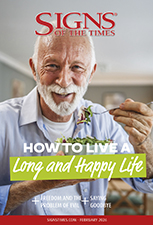
Dan Buettner, of Blue Zones fame, achieved notoriety when he, along with teams of scientists, fanned out across the globe, searching for people who enjoyed long and happy lives. They discovered groups of these people living in such diverse places as Okinawa, Japan; Sardinia, Italy; and Loma Linda, California. A higher percentage of residents in these locations are centenarians than is found in the rest of the world. These centenarians also suffer a fraction of the diseases that commonly kill people in other parts of the developed world, and they enjoy more healthy years of life than anyone else.
I had the privilege of interviewing Buettner, and when I reached him on his cell phone, he was in Okinawa, walking through a vegetable garden early in the morning, observing centenarians doing the work of men and women half their age and enjoying every minute of it. “Age isn’t a detriment here,” he told me. “These people greet each morning with a smile.”
Why do some individuals live long and happy lives, while others struggle each day, fighting depression, endless aches and pains, and the debilitating side effects of powerful medications?
the power of epigenetics
First, when it comes to health and longevity, there are no guarantees, just degrees of risk management. In the few thousand years since Creation, our environment has deteriorated and we have also reaped the results of the unhealthy choices of our ancestors.
An emerging scientific field called epigenetics shines a bright light on some surprising realities. What we do to ourselves affects not only our minds and bodies but also our genes. Our bad habits actually alter the DNA code that orchestrates our ability to fight disease and enjoy long, healthy lives. This alteration is passed down through at least three generations. In other words, we’re setting the stage for how our great-grandchildren will experience the health obstacles we face.
But epigenetics is revealing some good news as well. Upgrading our habits from unhealthy to healthy can also alter our DNA in the same direction, overpowering genetic predisposition. A man who suffers from a weakness for alcohol—a proclivity that’s been passed down to him from a parent or grandparent—must work harder to keep from stumbling into that problem than a man whose parents never touched the stuff. The destructive code is there, but if he never gives it a chance to “express” itself in his life—if he never takes a drink—the DNA he passes on to his children will be less demanding in that area. Finally, after a few generations of “unexpressed” genes, that predisposition vanishes.
This gene expression system is also at play for other so-called inherited tendencies, such as heart disease, mental illness, diabetes, and longevity. That’s right. Just because your parents, grandparents, and great-grandparents died at the age of 60 from heart attacks doesn’t mean you have to. And, conversely, just because your ancestors lived to be 100 doesn’t mean you will. There’s more to it than genes.
body of evidence
There’s an amazing longevity study found in Genesis chapters 5 and 11. Here, Scripture records the age, at death, of some of earth’s inhabitants before and after the Flood. Consider these men who lived before the Flood: Adam, 930 years; Seth, 912 years; Enosh, 905 years; Kenan, 910 years. Then there’s the most famous one of all—Methuselah, 969 years. The list finally ends with Lamech, who died at the ripe young age of 777 years.
Chapter 11 highlights the age of selected people after the Deluge: Shem, 500 years; Arphaxad, 403 years; Shelah, 403 years; Eber, 430 years; Peleg, 209 years; Reu, 207 years; Serug, 200 years. What changed? What effectively knocked centuries off the expected lifespan of these people? All evil people had been destroyed. The world was new again. Life was returning in abundance. Nature was rebuilding itself stronger and more resilient, as it always does. It does not appear that the environment caused this change in the ages of human beings.
The line that divides Genesis 5 and 11 is found in chapter 9. I’m not sure why God did what He did—many speculate on the reasons—but He suddenly removed a barrier He’d set up in Eden. It had to do with food. God told our first parents that they should feel free to eat “every seed-bearing plant . . . and every tree that has fruit with seed in it” (Genesis 1:29). In other words, eat a plant-based diet—what we today call a vegetarian diet.
God told Noah and his sons, “Be fruitful and increase in number and fill the earth” (Genesis 9:1). Then came the shocker: “Everything that lives and moves will be food for you. Just as I gave you the green plants, I now give you everything” (verse 3).
I firmly believe that God was bowing to the wishes of the Flood survivors—a wish that had been brewing since before the Deluge. Tending a garden was hard work. Killing an animal wasn’t—especially one that wasn’t afraid of you. Humankind had, over several generations, introduced something sinister into its DNA—a taste for blood.
This brings me to a statement made by another man I interviewed, the late Dr. John McDougall. As a health promoter, author, and creator of the McDougall Plan for building and maintaining optimum health, he reminded me that the bottom line for the quality and length of life we enjoy is simple—“It’s the food, Charles. It’s the food, Charles. It’s the food, Charles.”
the food of happiness
A vast majority of people who live long lives also live happy lives. It’s true in Okinawa, Sardinia, and Loma Linda. Centenarians tend to face each day with an optimism that’s missing in many younger people. This begs the question, “Are they happy because they’re old, or are they old because they’re happy?”
The answer lies in a well-known but often overlooked truth: it’s very hard to be happy and sick at the same time. Think about it. How jolly are you when your stomach, head, or joints ache? How much optimism do you feel when you’re fighting the debilitating effects of diabetes, heart disease, or obesity? One of the first casualties of disease is our feeling of well-being.
I recently asked friends on a social-networking site what they thought was the secret of longevity. I received comments ranging from “doing what you love to do at work,” to “keeping your stress levels low.” No one mentioned food.
But the food we eat directly determines the degree of health we enjoy. And health is inextricably tied to the level of happiness we experience. Those who live the longest on this earth share not only a high degree of happiness but a common menu. All tend to eat a predominantly whole-foods, plant-based diet; and they enjoy nutrition that protects them from lifestyle diseases and keeps their immune systems in good working order. The healthier you are, the happier you become. Health and happiness extend life. It’s really that simple.
As we return to the disease-fighting diet God intended for humanity to enjoy as recorded in Genesis 1, we set the stage for not only a long life but a happy one as well. Enjoying the full, healing benefits of positive thoughts, loving actions, and a forgiving spirit is possible only when we’ve fueled ourselves with sound nutrition.
Want to live a long and happy life? It all begins with what you put into your body. After that, the opportunities are endless. Just ask the happy centenarians in Okinawa, Sardinia, and Loma Linda. You’ll find many of them out working in their vegetable gardens.
10 proven tips for living
a long and happy life
Insist on good nutrition. You can’t do any better than a whole-foods, plant-based diet. Modern science is proving daily that the Creator God knew exactly what He was doing.
Move. Walk, jog, bend, stretch, bicycle, hike, and climb stairs. You know the old saying: “Use it or lose it.” Your body lives—and dies—by this motto.
Have a plan. Long-lived, happy people tend to live with a purpose. Find yours and go for it! Getting up close and personal with God is a wonderful way to start.
Rest. Enjoying a Sabbath break each week allows your mind and body to rejuvenate and heal. Living without this pause button increases wear and tear and shortens life.
Don’t overdo. More is not always better, especially when it comes to food and exercise. “Daily” and “moderate” should describe your every health routine.
Keep antioxidants up. They fight cancer. Don’t neglect these important nutritional elements that are found in abundance in fruits.
Socialize. Being part of a faith community, family structure, or civic club can help extend your life. Just be sure to surround yourself with positive, not negative, influences.
Worship. Those who live long, happy lives allow their spiritual beliefs to bring order and rituals into their lives.
Be patient. Regaining optimum health may take time, but doing so pays for itself with added, high-quality years.
Volunteer. Being part of something that benefits others will benefit you.